

When you’ve been holding it together for so long, it can feel like breaking down might break you.
You might be afraid that talking about your past will make things worse—or that once you start remembering, you won’t be able to stop. This fear is more common than most people realize. At COVE Behavioral Health, we offer EMDR therapy in Hobe Sound, Florida because we know there’s another way to heal: one that doesn’t rush or retraumatize you.
Why Trauma Feels So Hard to Talk About
Trauma has a way of stealing your words. For some, it happened so young or so quietly, it doesn’t even feel like it “counts.” For others, the memory is vivid—but so painful that saying it out loud feels dangerous.
You might worry that your trauma isn’t bad enough. Or that it’s too much. Either fear can stop people from getting help.
But here’s the truth: if it still hurts, it’s valid. If it still echoes, it deserves care. You don’t have to prove your pain to earn support.
What Is EMDR—and How Does It Work?
EMDR (Eye Movement Desensitization and Reprocessing) is a structured therapy that helps your brain process traumatic memories in a way that feels safer and less overwhelming.
Instead of retelling the full story in detail, EMDR uses bilateral stimulation (like guided eye movements or gentle tapping) while you focus briefly on a memory, sensation, or belief. This allows the brain to “unstick” the trauma and reprocess it—without retraumatization.
Think of it like clearing a logjam in your nervous system. The memory doesn’t disappear. But it stops blocking everything else.
The Benefits of EMDR Therapy
People are often surprised at how much changes when the weight of trauma begins to lift. EMDR doesn’t just help with the past—it frees up space in your present.
Common benefits include:
- Reduced anxiety and panic symptoms
Trauma often lives in the body. EMDR helps calm the nervous system and lessen fight-or-flight responses. - Improved sleep
Many clients notice fewer nightmares, racing thoughts, or middle-of-the-night wakeups after sessions. - More self-trust
EMDR can shift long-held beliefs like “I’m not safe” or “It was my fault” into truths like “I did what I could” or “It wasn’t mine to carry.” - Less reactivity in relationships
When trauma isn’t running the show, there’s more room for connection, patience, and choice. - Relief from emotional numbness or shutdown
EMDR helps thaw the freeze response, allowing you to feel—not drown.
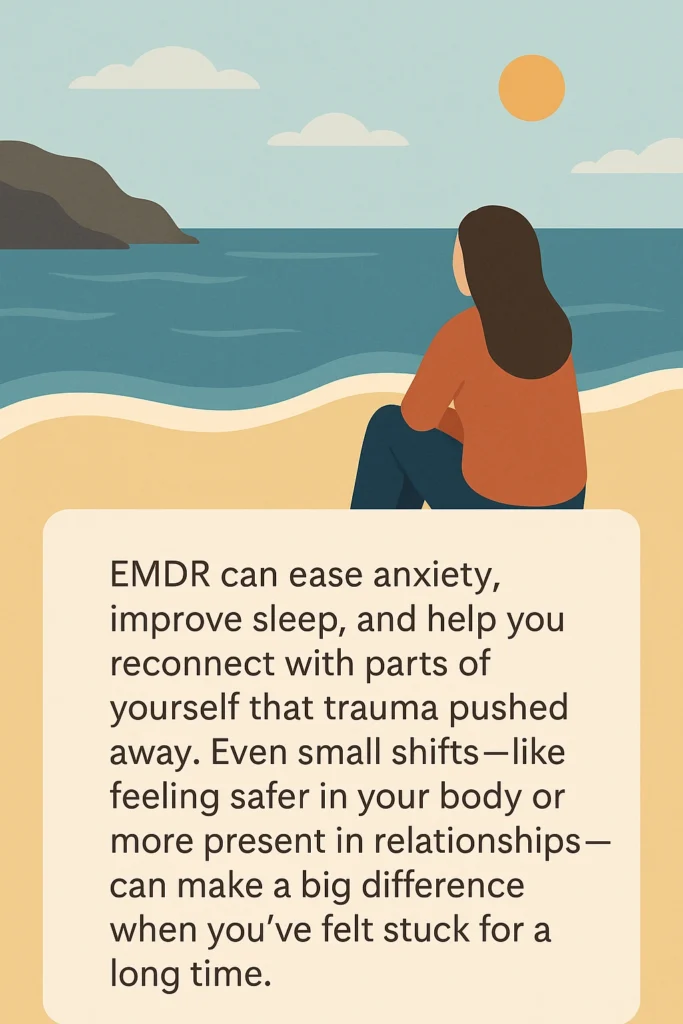
Not everyone experiences every benefit—but even small shifts can feel huge when you’ve been stuck.
It’s Okay to Go Slow
One of the biggest misconceptions about trauma therapy is that it has to be fast, dramatic, or cathartic. At COVE, we don’t believe in rushing your process. Healing isn’t about “getting over it.” It’s about reclaiming peace—one layer at a time.
The first phase of EMDR is about building safety. That might mean learning grounding skills, mapping triggers, or just building trust with your therapist. You’re not expected to dive in before you’re ready.
You Don’t Have to Be “Brave Enough”—Just Curious
We talk a lot about courage in therapy. But sometimes, it’s not about being brave. Sometimes it’s about being willing to wonder: What if this could get better?
One EMDR client put it like this:
“I didn’t know if I was ready. But I knew I couldn’t keep living like nothing happened.”
– EMDR Client, 2023
If all you can do is ask the question, that’s enough to start.
Learn More About EMDR Therapy in Hobe Sound, Florida
You don’t have to carry the weight alone—or forever. Call (888) 231-7973 or visit COVE Behavioral Health’s EMDR therapy page to learn more about how we support trauma recovery with compassion, pacing, and care in Hobe Sound, Florida.